
Read the signed lease, find your notice window, give notice that counts, and coordinate the changeover.
Start with the signed laundry agreement: the total term, the automatic-renewal clause, the termination-notice provision. California attorney Dale Alberstone documents two renewal structures in one named vendor's leases. One is five years plus two automatic five-year renewals; the other is ten years plus two automatic ten-year renewals. In both, the right to stop the renewal can sit with the laundry company. In a laundry lease the "LESSEE" is the vendor, and it leases your laundry room from you. Then calendar your deadline and send notice exactly as the contract requires: right form, right address, right date. What happens to the vendor's machines is settled by your agreement and nothing else. No source we found establishes a general practice.
The changeover is a scheduling problem: machines out, machines in, residents never without laundry. The contract is not. In both reported matters below, the property filed or threatened eviction proceedings before the machines came out. One New York attorney's summary of boards in one-sided laundry contracts: "their rights are few and far between." So work in order. Understand what you signed, find out whether you can act this year, then give notice exactly as required. For some readers the answer will be "not this year"; the steps still tell you which date to work toward.
This guide is written by Art's Washers & Dryers, a local San Diego operator that would like to earn your business. Every source below is named so you can check it, and because your lease governs, what follows is a general procedure, not a description of any operator's lease forms. Under CSC rather than WASH? Same steps, and our CSC ServiceWorks comparison covers that lane. This is not legal advice; if the language is unclear, have your attorney read it.
Locate the signed laundry agreement, not the brochure. You want the total term, the auto-renewal clause, and the termination-notice provision. Flag two more: any right of first refusal, and any early-termination or buyout language. On the second, the California firm Bornstein Law raises a possible lump-sum buyout for cancelling early. The mention is hedged, with no sample clause behind it. Look for the clause; do not budget for a cost.
Expect to hunt. Renewal clauses hide inside provisions that have nothing to do with renewal, New York attorney Jeff Reich told Brick Underground in 2023. If you cannot find the signed copy, request it from the vendor in writing; an agreement your predecessor signed can still bind you.
An automatic-renewal or "evergreen" clause rolls the agreement into another term unless notice arrives inside a defined window.
Alberstone, in a May 2017 column for the Apartment Owners Association of California, described an eight-unit Los Angeles building's lease: five years from 2002, plus two automatic five-year renewals. "If Dadson did not cancel either renewal, the total term of the lease would be at least 15 years!" At least: a floor, not a ceiling. A later column, authored January 2020, pairs that with the larger structure: ten-year terms with two automatic ten-year renewals, "potentially, 30 years in all." One attorney's observation of one named vendor's lease forms, not a measurement of the market.
Then ask who "LESSEE" means. The laundry company is the lessee; it leases the room from you. So a clause letting LESSEE decline the renewal hands that right to the vendor. Alberstone reports that almost none of the owners he counselled over thirty years had understood it.
The ten-year structure was litigated. In MES Investments, LLC v. Dadson Washer Service, Inc. (docket B297634, California Court of Appeal, Second District, Division 3, decided September 25, 2020), a 22-unit West Hollywood lease renewed automatically "unless Dadson elected not to renew it." The court held a common-area laundry room is a machine room, not residential real property, so Civil Code §1945.5, the residential automatic-renewal protection, "does not apply." Only that §1945.5 holding is certified for publication. The opinion also bound the 2017 buyer to a never-recorded lease it had actual knowledge of, a holding expressly not certified and carrying less weight. It is a different Dadson matter from the Los Angeles building above. In California, then, a laundry-room lease sits outside §1945.5's renewal protection.
If your window has already closed, and only the vendor could have stopped the renewal, you are in the next term. Calendar the next one now, and read the default and escape provisions to see whether service failures give you a termination right instead. Document them as an attorney would need them: dates, machines, hours out of service, not that residents are complaining. What to do while a machine is down, including what your agreement should have said about response times, is a guide of its own.
Your lease sets a notice period, a delivery method and an address. Missing the window by a day can commit the property to another term.
In the clause Alberstone reproduces, renewal is automatic "unless LESSEE gives LESSOR notice in writing by registered or certified mail return receipt requested at least 180 days prior to the end of the then-current term." Read the parties again: that notice right belonged to the laundry company, not the owner.
Pro note: Calendar the notice deadline immediately so it does not slip past.
Three published notice figures are worth seeing because they disagree.
| Published figure | Where it comes from | What it actually is |
|---|---|---|
| 180 days | The renewal clause Dale Alberstone reproduces, California, 2017 | A notice right held by the laundry company, not the owner |
| 90 or 120 days | Brick Underground's 2023 account of New York evergreen clauses | The window in which a board must terminate affirmatively, or the contract renews |
| 30 to 90 days | Two New York practitioners quoted in a 2011 trade-press checklist | A negotiating target: time to find a replacement, not a term in anyone's contract |
Two states, three sources, three meanings. Not a range, not averageable, and none of them your deadline. Find yours.
These two clauses sound alike and do opposite things. A right of first offer lets the incumbent bring you a best and final you are free to decline. If that is all your contract gives them, Reich's point is that you are clear. A right of first refusal lets it match whatever offer you bring back, and keep the room.
The clause Alberstone quotes reaches both routes out: the laundry service may "match any offer from a new company to (1) lease the laundry room space, or (2) sell coin-operated laundry equipment." Run a competitive process under that clause and you can end where you started, having shown the incumbent a rival's best terms for free. So before you compare local operators, check whether the clause is in your agreement.
The other side has a fair point. John Shaffer, an attorney writing for the California nonprofit ECHO, notes that laundry service companies, unlike most vendors, have "a legitimate need to recover their investment in the equipment they provide." Is your clause proportionate to that, or simply indefinite? The question bites hardest for HOA and condominium boards, which have a prior question of their own: what the association's own recorded documents allow the board to commit to. If you have the clause, ask counsel whether it is enforceable as drafted, or negotiate it away. Alberstone's guidance for anything you sign next is blunt: "Never sign a laundry lease which gives a Right of First Refusal to the laundry company."
If the term, renewal, notice, right-of-first-refusal or default language is ambiguous, have a real estate or contracts attorney read the specific clauses before you act, including anything that reads like an early-termination charge. A short review is cheaper than an accidental multi-year renewal.
Send the non-renewal or termination notice in the exact form, to the exact address, by the exact deadline the lease specifies, and keep proof of delivery. A phone call or email will not do unless the contract says so. If the lease names registered or certified mail with return receipt, use exactly that and file the receipt with the agreement.
Terminating for default is a different route, running on the default clause's own notice and cure mechanics, possibly a different deadline and address. Read that clause first.
Once notice is in, the replacement is a different job: how to choose a laundry vendor.
Pro note: Written, tracked notice protects you if the vendor disputes the cancellation.
Ownership decides this. Machines your property bought are yours, and removal is logistics; the lease-versus-buy question is a separate guide. Machines the vendor supplied, installed, owns and maintains are a contract question. Three things are established; one important thing is not.
In at least one published lease form, removal is the vendor's right, not its duty. Clause 7 of the BlumbergExcelsior apartment-house laundry lease prepared by Adam Leitman Bailey, P.C.: "So long as Lessee is current in all payments of rent and additional rent, Lessee shall have the right to remove the equipment at the expiration of this agreement or the prior termination thereof." No deadline, no allocation of who pays. One published New York-origin form, not any operator's contract. But it explains how the next two disputes happened.
In two reported matters, the machines did not come out on request. Alberstone's client asked for the equipment to be removed in 2007 and again in 2016; the vendor refused both times, latterly relying on its right of first refusal. "March 7, 2017 came and went, but Dadson refused to remove its equipment." An unlawful detainer complaint filed in Los Angeles Superior Court on March 30, 2017 got them hauled away on April 18, before trial. One attorney's account of his own client's matter. One outcome, not the outcome.
The second is a primary court record, from Florida: CSC Serviceworks, Inc. v. Boca Bayou Condominium Association, Inc. and Commercial Laundries, Inc., Fourth District Court of Appeal of Florida, No. 4D17-0974, decided March 7, 2018. The old machines were still connected when the incoming operator arrived after termination, so with the association's approval it disconnected them and moved them aside, without taking them off the premises. They left only after a demand requiring removal within fifteen days. The outgoing vendor sued, including for unlawful detainer, and lost on appeal under Florida law, which establishes nothing about California or general practice.
And you cannot settle it by unplugging them yourself. Bornstein Law states the California position flatly: "Owners cannot just remove the machines on their own because it's a breach of contract."
No source we found sets out a general practice for who removes vendor-owned machines, at whose cost, or on what timeline. Your own agreement settles it, and if it is silent on removal, that silence is the fact to plan around. Find that language before your term ends, and get a removal date in writing.
Comparing operators is the next job, and a separate one: our WASH alternatives comparison starts there.
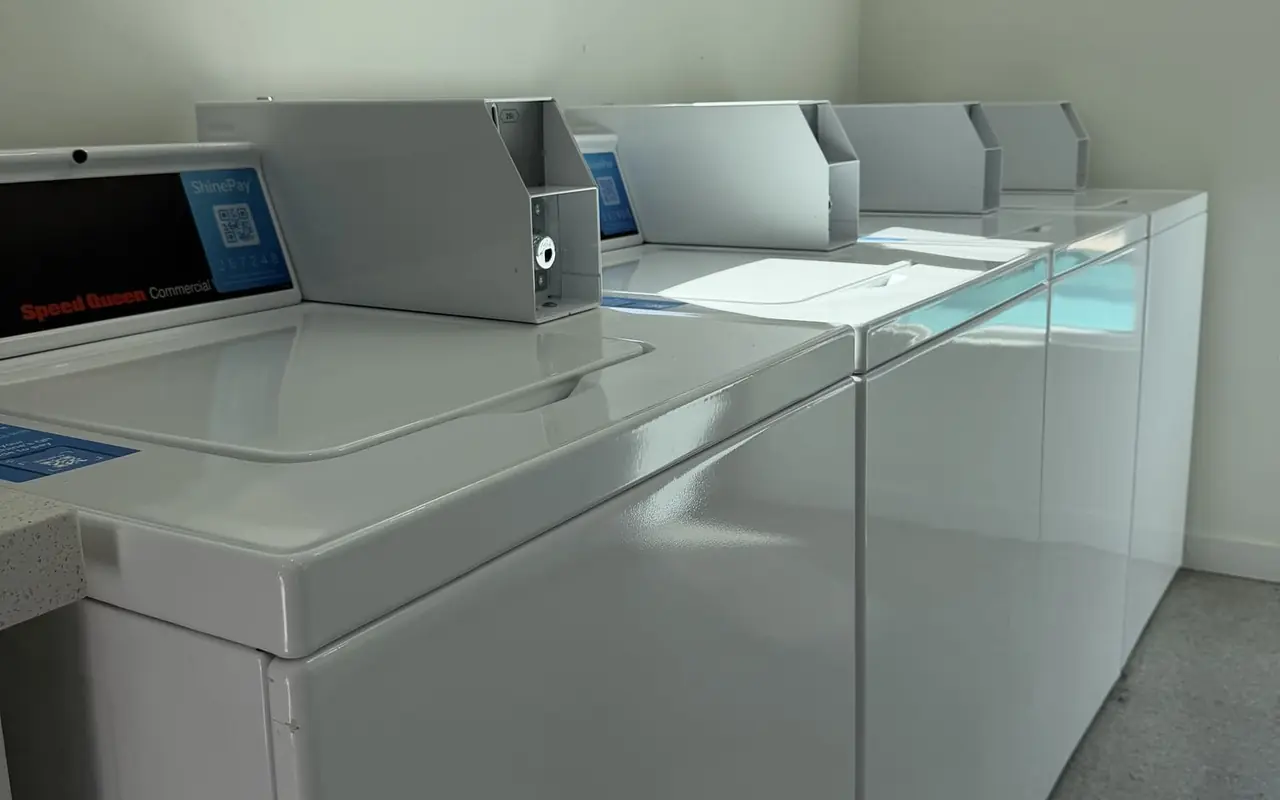
Art's would like to be on that list. We time our installation to your termination date, so residents are not left without laundry once the room is clear of the outgoing vendor's machines. If your property owns its current machines, we remove and recycle them at no charge. Free recycling applies to machines the property owns, not leased vendor units. Machines belonging to your outgoing vendor are governed by your agreement with them, not by anything we can promise. Our model is revenue share: Art's owns the machines and carries the cost of servicing and repairing them, so there is no up-front cost to the property for the equipment or the installation, and you take a monthly share of what the room collects. The property keeps paying the laundry room's water, sewer, electricity and gas, exactly as it does today. On service we promise a 1-hour response and guaranteed 24-48 hour repairs on stocked Speed Queen parts. That is a written commitment, not measured performance, so look for it in the draft agreement rather than taking it on trust.
One note on our own paperwork: read ours as this guide asks you to read your current one, and get the answers in writing first.
Read the signed agreement for term, renewal, notice and any right of first refusal, then give written notice exactly as specified. Check who holds the cancellation right: in a laundry lease the vendor is the "LESSEE." The steps above have the detail. Not legal advice.
Yes. Writing for the Apartment Owners Association of California, attorney Dale S. Alberstone documents two structures in one named vendor's leases: five years plus two automatic five-year renewals, where "the total term of the lease would be at least 15 years," and ten-year terms with two automatic ten-year renewals, "potentially, 30 years in all." Neither source measures how often such clauses appear. Step 2 above has the California appellate decision that tested the second structure; read your own renewal language and calendar the deadline.
If the property owns them, it is logistics, and Art's removes and recycles owner-owned machines at no charge. If the outgoing vendor owns them, your agreement with that vendor settles it. No source we found sets out a general practice for who removes vendor-owned machines, at whose cost, or on what timeline, so find that language before your term ends and get a removal date in writing.
The changeover section above has it: installation timed to your termination date, free removal and recycling if you own the machines. Machines belonging to your outgoing vendor are governed by your agreement with that vendor.
No up-front cost from Art's: the model is a revenue-share lease, and removal of old owner-owned machines is free. The property keeps paying the laundry room's water, sewer, electricity and gas, exactly as it does today. What Art's cannot control is your existing agreement: a buyout provision if yours has one, and what it says about the old machines.
No. This is general information to help you organize the switch, not legal advice, and it does not tell you to break a contract. The goal is to follow your lease correctly: understand the term and renewal, give proper written notice, and change vendors cleanly when the contract allows. For anything ambiguous in your specific lease, consult a licensed attorney.
We own the machines and we cover every repair, parts and labor included. No obligation.